How it's made
From waste paper to finished ream.
Intake, baling, mill floor, finished product — the strongest differentiator on this site, shown in full.
Step 01
Intake
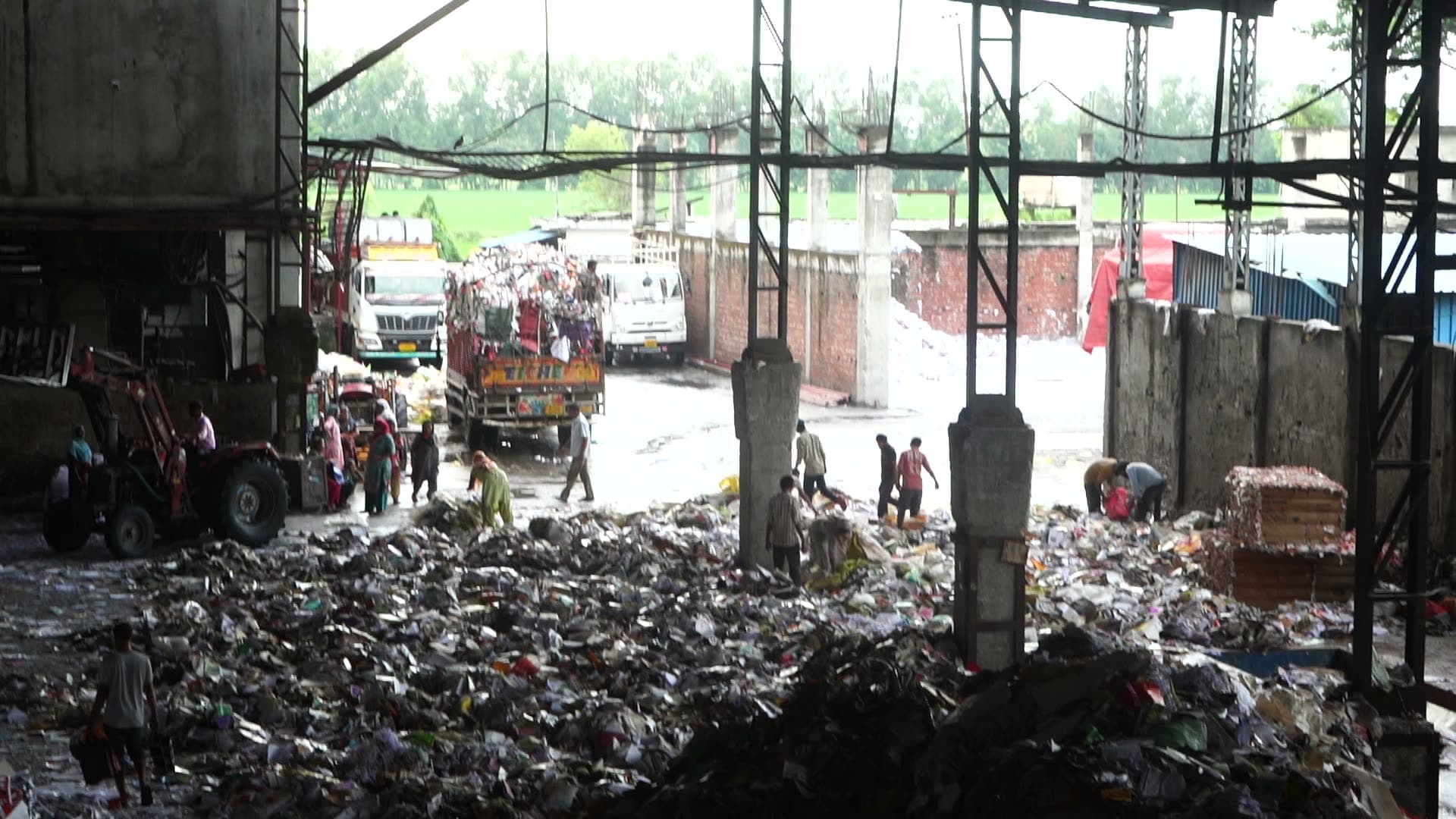
Waste paper arrives from collection networks across India and is sorted by grade — newsprint, mixed paper, office waste, board — with contaminants pulled out before anything moves onto the floor. Every batch of raw material is checked on arrival for grade, contamination and moisture. Consistency here is what makes the finished sheet consistent.
- Grade inspection
- Contamination check
- Moisture check
Step 02
Baling
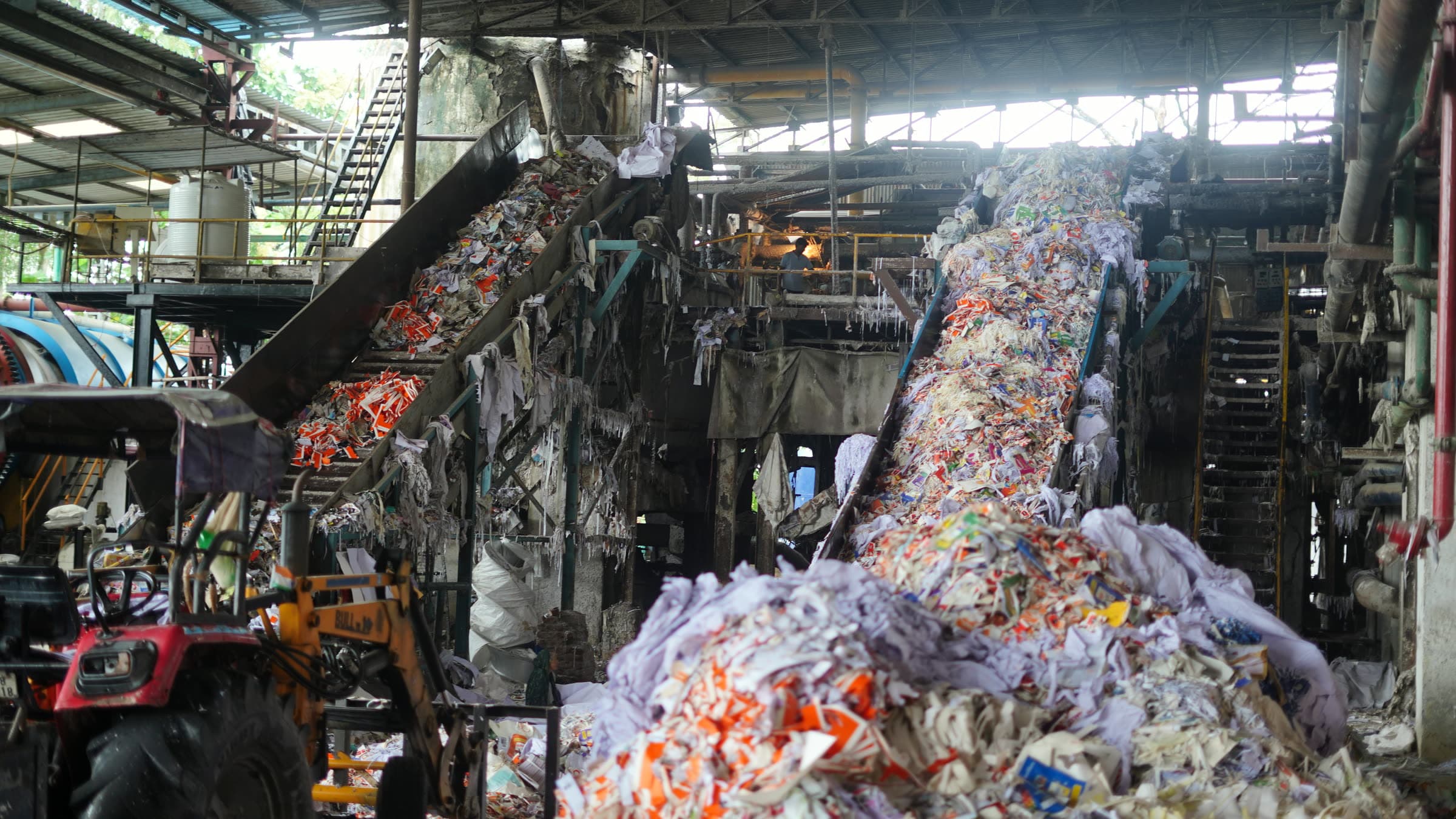
Sorted stock is baled and staged for the pulping line in a sequence that keeps grades separate and traceable, so what goes into a batch is known and repeatable. From here, water and mechanical action in the pulper break the bale down into a fibre suspension, ready for cleaning.
- Sort verification
- Bale traceability tagging
Step 03
Mill floor
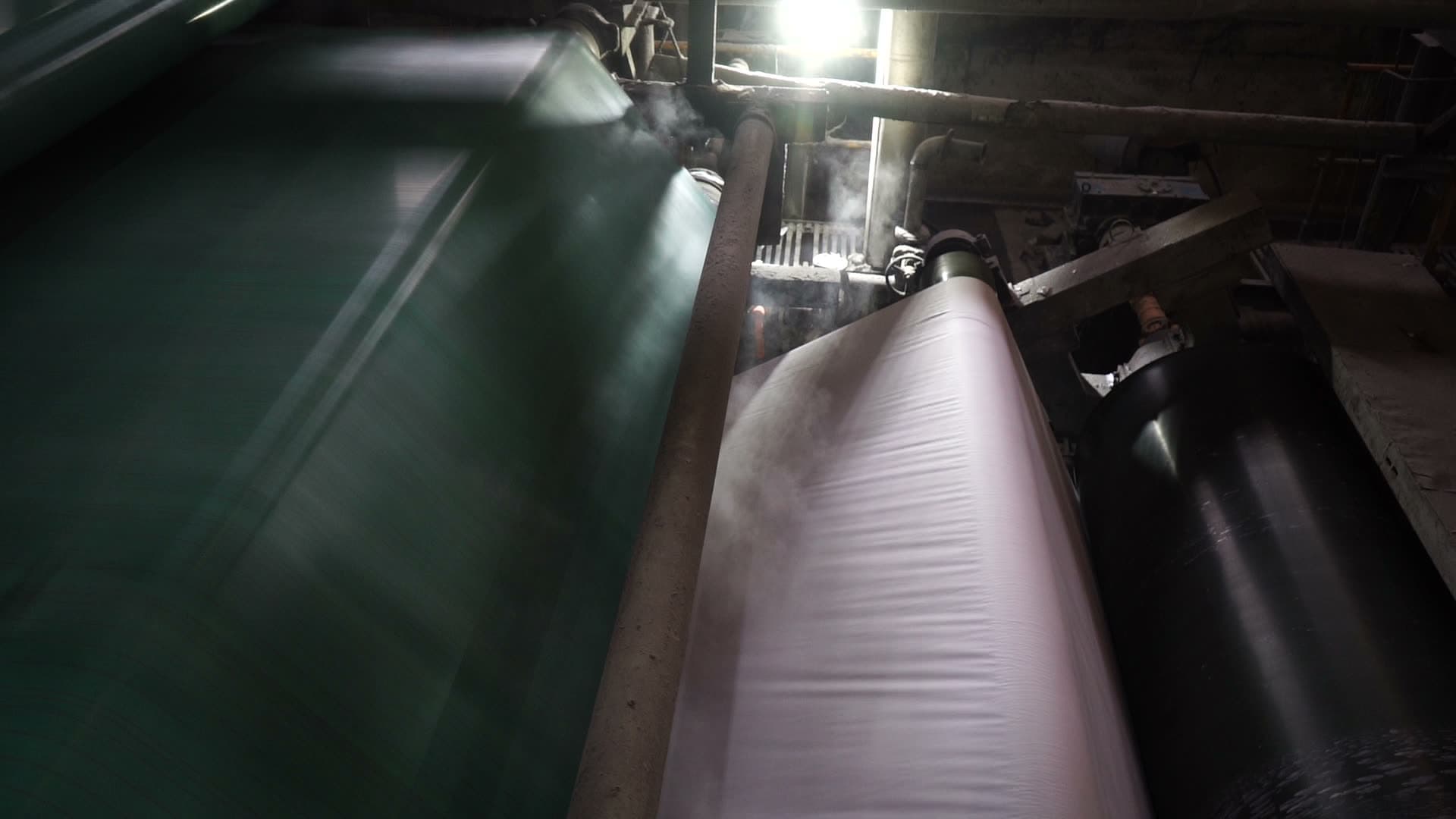
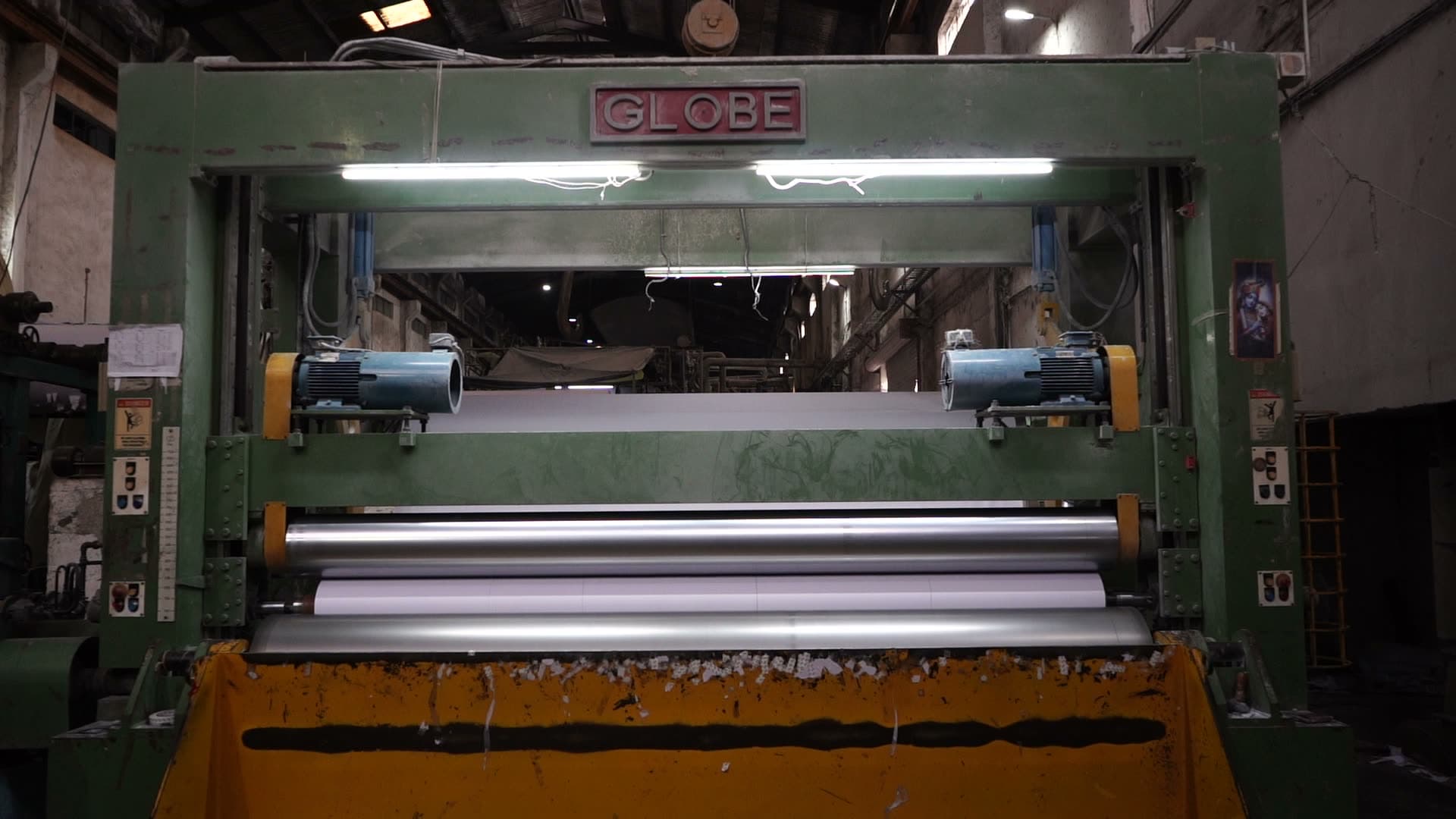
This is where the sheet is made. Pulp passes through centrifugal cleaners and pressure screens to remove residual contaminants, then — for grades that need it — through flotation de-inking, where air bubbles lift ink particles away from the fibre. Refining develops the bonding strength each grade needs before the pulp reaches the paper machine, where it's formed on the wire, pressed and dried to a controlled GSM and finish. In-line checks through this stage are what keep every ream to specification.
- GSM control
- Moisture control
- Finish inspection
- De-inking brightness check
Step 04
Finished product
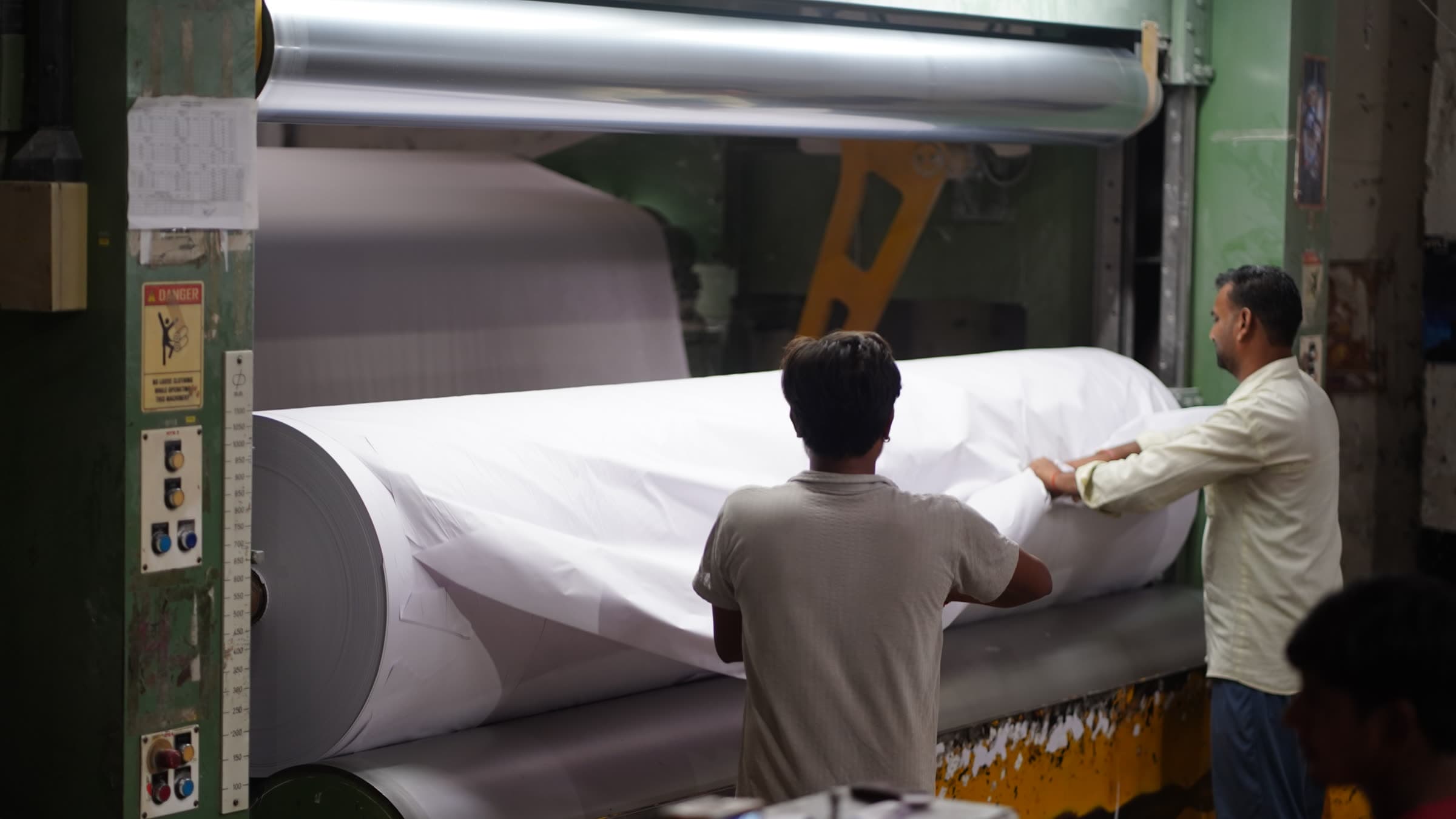
Every reel is tested — basis weight, brightness, opacity, tear strength, smoothness — before it's converted to the sheet or roll sizes an order requires, then cut, reamed and packed. Each pack is checked before it's staged for PAN-India dispatch.
- Count verification
- Pack integrity check
- Dispatch label check
- Tear strength & opacity test
Quality control
Checked at every stage, not just at the end.
01
Intake
- Grade inspection
- Contamination check
- Moisture check
02
Baling
- Sort verification
- Bale traceability tagging
03
Mill floor
- GSM control
- Moisture control
- Finish inspection
- De-inking brightness check
04
Finished product
- Count verification
- Pack integrity check
- Dispatch label check
- Tear strength & opacity test
Capacity & infrastructure
Built for volume.
2.8m
Machine deckle width
Sample figure — pending client approval.
3,500MT/month
Production capacity
Sample figure — pending client approval.
2,000MT
Warehousing capacity
Sample figure — pending client approval.
Media gallery
The mill floor, in stills.
Need a quote for bulk volumes?
Tell us your grade, GSM and monthly requirement — our mill team will get back to you.